Understanding and articulating emotions is a fundamental life skill, yet many of us were never formally taught how to do this.
Whether at school or within our families, emotional literacy was often overlooked. Fortunately, some schools now include this work in their PSHE curriculum, but there is still much more to be done.

Developing a Language to Understand Emotions
Our emotions act as signals, guiding our responses to situations and interactions. The ability to recognise, name, and express emotions accurately can improve communication, relationships, and overall well-being.
Without a developed emotional vocabulary, feelings can become difficult to navigate, leading to frustration or miscommunication.
Building this skill involves expanding our understanding of emotions beyond basic terms like ‘happy’ or ‘sad’. By identifying the nuances of what we feel, we gain greater self-awareness and control.
Instead of saying we are simply ‘angry’, for instance, we might recognise that we feel ‘frustrated’, ‘resentful’, or ‘disappointed’—each of which has different implications and potential solutions.
Emotions as Messages or ‘Data’
One of the most powerful ways to reframe emotions is to see them as useful data rather than problems to be solved. The concept of useful data has been poularized in recent years by psychologist Susan David.
Each feeling carries information about our experiences and needs. For example:
- Anxiety might signal that we are stepping outside our comfort zone or that something important to us is at stake.
- Guilt can indicate that our actions may have conflicted with our values, prompting reflection and adjustment.
- Excitement can show us what truly motivates and energises us.
By learning to decode these messages, we can respond more effectively to our emotions rather than being overwhelmed by them.
Emotional Agility and Its Importance
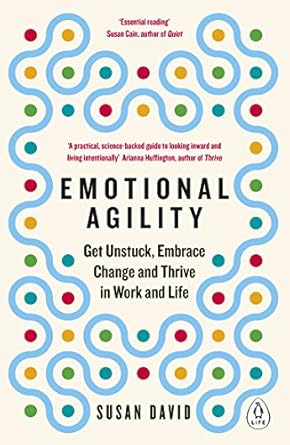
Susan David explores this concept in her book Emotional Agility. She outlines how embracing our emotions with curiosity and flexibility, rather than suppressing or over-identifying with them, can lead to better decision-making and greater resilience.
Her approach suggests four key steps to developing emotional agility:
- Showing Up – Acknowledging and accepting emotions without judgement.
- Stepping Out – Creating space between ourselves and our emotions to gain perspective.
- Walking Your Why – Aligning decisions with core values.
- Moving On – Making small, intentional adjustments in response to emotional insights.
This flexible approach helps us navigate difficult emotions in a way that supports growth and positive change.
Using Emotion Wheels to Build Emotional Awareness
A practical way to develop emotional literacy is through emotion wheels. You can find an example on the Calm website.
These diagrams categorise emotions into primary feelings and their more specific variations, helping us identify and articulate exactly what we are experiencing.
Regularly using an emotion wheel can help with:
- Expanding emotional vocabulary
- Improving self-awareness and emotional intelligence
- Enhancing communication with others
- Recognising emotional patterns and triggers
Emotion wheels can be particularly helpful for children, but they are equally valuable for adults looking to deepen their understanding of emotions.
Seeking Support When Needed
While developing an emotional vocabulary is empowering, it is important to recognise when emotions become overwhelming.
If you are experiencing extreme or unmanageable emotions, seeking support is a crucial step. Contacting a GP, a mental health professional, or organisations such as Mind or Samaritans can provide guidance and assistance.
Why Emotional Literacy is Important in Coaching
Building a robust language of emotions is an ongoing journey.
Traditionally it’s been mainly the domain of counselling and therapy. However, we are all humans living and working in an evermore complex and fast moving world, so emotions will come up in coaching too.
By equipping ourselves with the right tools and approaches, we can navigate life’s emotional landscape with greater confidence and clarity, and also articulate our experiences of life, feeling stuck or disempowered more accurately, leading to a greater chance of being able to make positive change.
Understanding our emotions and using them as valuable data allows us to respond to challenges with resilience and authenticity, fostering personal growth and emotional wellbeing.
If you’re ready to explore how coaching can support you in navigating your emotions and creating meaningful change, book a free discovery call today.